Introduction
In the realm of medical diagnostics, one revolutionary technology that has significantly impacted healthcare is ultrasound imaging. From its humble beginnings inspired by the echolocation abilities of dolphins to its advanced applications in modern medicine, ultrasound has transformed the way doctors diagnose and monitor various medical conditions. The couple scheduled an appointment at an essex ultrasound clinic, eagerly anticipating the opportunity to glimpse their growing baby and receive valuable medical insights. In this comprehensive article, we will delve into the fascinating journey of ultrasound imaging, exploring its origins, technological advancements, and diverse applications across different medical fields.
The Birth of Ultrasound
Ultrasound imaging, also known as sonography, traces its roots back to the early 19th century when scientists began to unravel the mysteries of sound waves. Inspired by the echolocation abilities of marine mammals like dolphins, researchers sought to harness the power of sound for medical purposes. In 1826, French physicist Jean-Daniel Colladon conducted experiments to study the speed of sound in water, laying the groundwork for future developments in ultrasound technology.
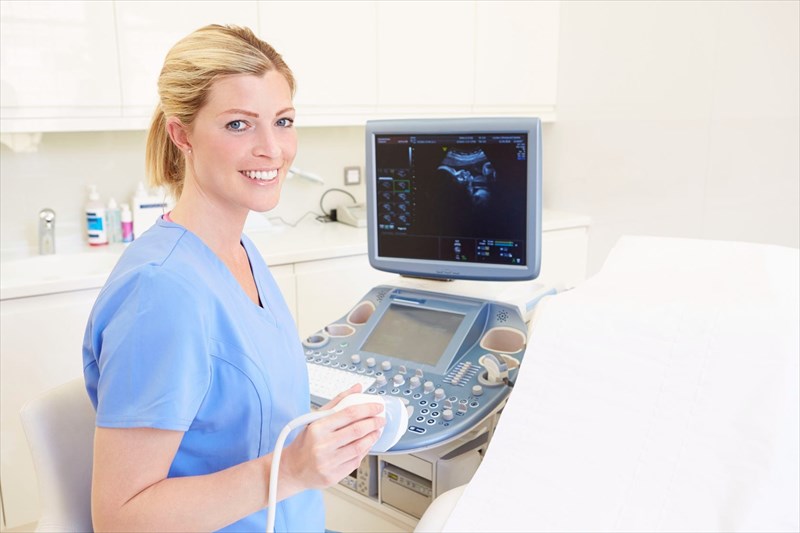
Pioneering Years: Early Ultrasound Devices
The true breakthrough in ultrasound technology came during the mid-20th century when researchers and engineers made significant strides in device development. In 1942, Austrian neurologist Karl Dussik published the first medical application of ultrasound, using it to detect brain tumors. This paved the way for further advancements in ultrasound imaging techniques.
The early ultrasound devices were bulky and relied on piezoelectric crystals to generate and receive sound waves. These devices produced low-resolution images and were primarily used for obstetric purposes. However, they laid the foundation for future innovations in ultrasound technology.
Transducer Technology: Enhancing Image Quality
As technology advanced, so did the ultrasound transducers—the key component responsible for emitting and receiving sound waves. The introduction of phased-array and linear-array transducers revolutionized ultrasound imaging by improving image resolution and providing real-time imaging capabilities.
Phased-array transducers, consisting of multiple elements, allowed for beamforming, which enabled the manipulation of sound waves to focus on specific areas of interest. Linear-array transducers, on the other hand, facilitated high-resolution imaging for applications requiring detailed anatomical visualization.
Ultrasound Imaging Modes
Over time, ultrasound imaging has evolved to encompass various modes, each serving specific diagnostic purposes. Let’s explore some of the commonly used modes in modern ultrasound:
1. A-mode (Amplitude Mode)
A-mode ultrasound is the simplest form of ultrasound imaging. It represents the echo amplitude of the sound waves as a function of depth, providing valuable information about tissue interfaces and calculating measurements such as organ size.
2. B-mode (Brightness Mode)
B-mode ultrasound is the most widely used imaging mode. It generates a 2D grayscale image, where different shades of gray represent varying tissue densities. B-mode imaging allows for detailed visualization of organs, tumors, and abnormalities.
3. M-mode (Motion Mode)
M-mode ultrasound provides a dynamic representation of moving structures over time. It is commonly used in cardiology to observe the movement of heart structures, such as valves and walls, aiding in the diagnosis of cardiac conditions.
4. Doppler Imaging
Doppler imaging employs the Doppler effect to evaluate blood flow within the body. It can detect and analyze the velocity and direction of blood flow, assisting in the diagnosis of conditions such as deep vein thrombosis, arterial stenosis, and fetal well-being during pregnancy.
Applications of Ultrasound Imaging
Ultrasound imaging finds applications across various medical specialties, making it a versatile diagnostic tool. Let’s explore some of the domains where ultrasound has become an indispensable part of medical practice:
1. Obstetrics and Gynecology
Ultrasound plays a crucial role in monitoring fetal development during pregnancy. It enables obstetricians to assess the baby’s growth, detect abnormalities, and determine the baby’s position in the uterus. Additionally, ultrasound assists in evaluating the female reproductive system, aiding in the diagnosis of conditions such as ovarian cysts, uterine fibroids, and infertility issues.
2. Radiology
Ultrasound is widely used in radiology to visualize and diagnose various conditions affecting the organs and tissues. It provides valuable insights into abdominal organs like the liver, kidneys, and gallbladder, aiding in the detection of abnormalities, such as tumors, cysts, and stones. Furthermore, ultrasound-guided procedures, such as biopsies and drainages, have become standard in interventional radiology.
3. Cardiology
In cardiology, ultrasound imaging, or echocardiography, is extensively used to evaluate the structure and function of the heart. It helps cardiologists assess heart valves, measure heart chamber dimensions, and identify abnormalities, such as congenital heart defects or heart valve diseases. Echocardiography plays a vital role in diagnosing and monitoring cardiovascular conditions.
4. Emergency Medicine
Ultrasound has emerged as an invaluable tool in emergency medicine due to its portability and real-time imaging capabilities. It aids in the rapid assessment of trauma patients, diagnosing conditions like internal bleeding, pneumothorax, and fractures. Moreover, ultrasound assists in guiding procedures such as central line placements and nerve blocks in emergency settings.
Future Perspectives and Advancements
The field of ultrasound imaging continues to evolve, driven by advancements in technology and research. Here are some notable trends and potential future developments:
1. Point-of-Care Ultrasound (POCUS)
POCUS refers to the use of ultrasound at the patient’s bedside by healthcare professionals. This approach allows for immediate assessments, faster diagnosis, and more targeted treatments. POCUS has gained popularity in emergency departments, intensive care units, and remote medical settings.
2. 3D and 4D Ultrasound
Advancements in transducer technology and image processing techniques have paved the way for 3D and 4D ultrasound imaging. Three-dimensional imaging provides a more comprehensive view of anatomical structures, enabling improved diagnostic accuracy. Additionally, real-time 4D imaging adds the element of time, allowing clinicians to observe the dynamic movements of organs and tissues.
3. Contrast-Enhanced Ultrasound (CEUS)
Contrast-enhanced ultrasound involves the use of microbubble contrast agents to enhance the visualization of blood flow within organs. It offers improved imaging capabilities for assessing vascularity and detecting abnormalities like tumors and liver lesions. CEUS shows promise in various applications, including liver imaging, tumor characterization, and assessing vascular pathologies.
Conclusion
From its inception inspired by dolphins to its widespread use in modern medical practice, ultrasound imaging has come a long way. Its non-invasive nature, real-time imaging capabilities, and versatility make it an invaluable tool for diagnosing and monitoring a wide range of medical conditions. As technology continues to advance, ultrasound is poised to play an even more significant role in healthcare, revolutionizing patient care and contributing to improved outcomes.
Leave a Reply